


The Fun Side of Finance. A Conversation with Alex Clarke from Albatross.

Updated: May 2
Accounting firms are not usually described as fun. More often, they leave people with a sense of worry from all the complicated, financial language and tax form deadlines. Well, maybe it’s time to change that narrative. When you sit down with Alex Clarke, founder of Albatross in Gland, you quickly realise that he is trying to do exactly that.
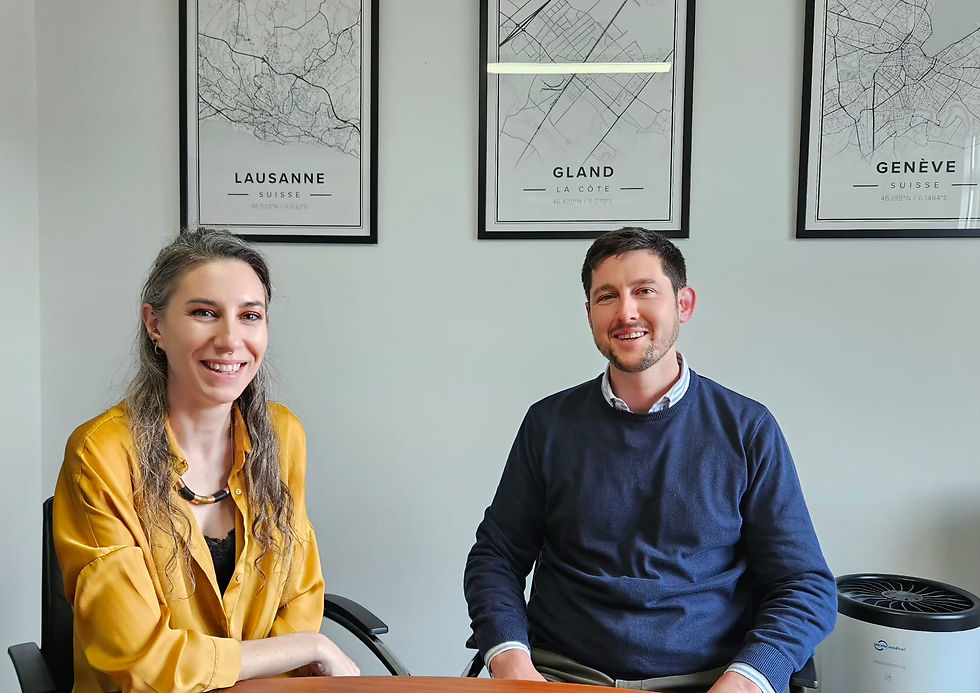
Earlier this year, I visited the team at their offices in Gland to learn more about the company, how they work with entrepreneurs across the region, and what sets their approach apart. What followed was a conversation that ranged from tax season realities to startup ambitions, team culture and even the growing role of AI in finance.
The result is a firm that combines serious expertise with a refreshingly straightforward approach.
Building Albatross
Before founding Albatross, Alex spent several years working in the accounting and consulting world, including time at PricewaterhouseCoopers. While the experience gave him a strong technical foundation, it also helped clarify what he wanted to do differently.
With a background rooted in finance, he realised his real interest lay in working with entrepreneurs, the people driving their ideas forward and building businesses. This led to the creation of Albatross, a company focused on providing clear, accessible financial support for small to medium-sized businesses, as well as individuals navigating the Swiss system.
“We wanted to create a package that helps entrepreneurs navigate the complexities of finance, accounting, and tax,” Alex explained. “We cater to different types of entrepreneurs, from solo consultants to ambitious startups.”
Today, the firm works with a mix of clients around 60% companies and 40% individual tax clients. While the profiles vary, the need is often the same: guidance through the financial side of running a business or a household. For many entrepreneurs, that relationship becomes long-term. The work goes beyond compliance into planning, projections and thinking ahead. “You almost become partners,” Alex says. “Understanding clients’ unique needs is key.”

Why “Albatross”?
The name itself was also a deliberate choice. Alex knew early on that he didn’t want the company to be built around his own name, something common in more traditional firms. Instead, he wanted something that felt distinct, neutral and easy to recognise across languages.
“Albatross works in both French and English,” he explains. “And it’s not tied to a person.” There’s also a sense of direction behind it. The idea of “flying high” reflects the ambition not just for the company, but for the clients they work with, many of whom are building something of their own. It’s a small detail, but one that captures the tone of the firm. Professional, but not conventional.
The Questions People Really Ask
For individuals, the biggest challenge is often simply understanding how the Swiss tax system works. As Alex explains, the most common questions are surprisingly straightforward. People want to know where they stand, what they need to declare and how much tax they will ultimately owe.
For expatriates arriving in Switzerland, the process can feel even more complex, particularly when assets abroad need to be factored in.
The timeline itself can also be a source of confusion. A tax return can take anywhere from six to nine months between submission and final assessment, leaving many people unsure of what is happening in the meantime. At its core, the service comes down to reassurance.
“At the end of the day, people come to us for peace of mind.”
Transparency and Simplicity
One thing that stands out in conversation is the firm’s focus on clarity. Services are structured and explained in a way that makes them accessible, particularly for those unfamiliar with the Swiss system. Finance and tax can quickly become technical, but the emphasis here is on making things understandable without overcomplicating them.
That clarity is especially valuable for the firm’s international client base, where navigating both language and financial systems can add an extra layer of complexity. Growth for the company is also something they approach carefully. Rather than taking on every client, the focus is on maintaining quality and building relationships that work long-term.
It’s a deliberate choice and one that reflects how they want to position the business.

A Young Team, A Different Culture
While the work itself is structured and detail-heavy, the culture inside the office is intentionally more relaxed. Camille Colomer Bastanti, Managing Director, has been with Albatross for five years and plays a key role in the day-to-day running of the business.
“The work we do is serious, but the atmosphere doesn’t have to be, and we try to keep a friendly environment.”
Her focus is on organisation and ensuring processes run smoothly across the team. The structure allows each team member to take ownership of their work while maintaining a collaborative approach. Monthly team lunches and an open, approachable culture help create a sense of balance, something that becomes particularly important during busy periods like tax season.
“There has to be trust and respect between the team. That’s the only way to get through the busy, high-stress periods.”
Advice for Entrepreneurs
In a region like La Côte, where many professionals are exploring independent or entrepreneurial paths, the team sees a consistent pattern. Many people are highly skilled in their core profession but underestimate the administrative side of running a business.
Most new business owners quickly realise that running a company is about more than just their core skill. As we discussed, you don’t just do the work, you become everything. Sales. Marketing. Admin. Finance. It’s often at that point that people realise they need support. Both Alex and Camille work diligently to demystify the tax landscape for their clients. They guide individuals through the intricacies of tax returns, ensuring they don’t miss out on deductions or deadlines.
“Don’t ignore the administrative side of your business,” Camille says. “The things you ignore today often become problems later.”
Alex adds that even a simple starting point can make a difference. “You don’t need a perfect plan, but you should have at least a minimum vision.”

The AI Question
Before wrapping up, I asked Alex what he thought about the rise of AI and whether it’s starting to change how people approach their tax returns. His response was immediate.
“People already ask AI questions about taxes but the answers are often wrong.”
He explains that much of the information AI tools rely on comes from general articles or blogs, which don’t reflect the complexity of the Swiss system. “In Switzerland, tax is handled at a cantonal level,” he says. “So the rules are very specific. AI doesn’t have access to the right level of detail.”
That means while AI might seem like a quick solution, it can easily mislead, particularly when it comes to personal situations or nuanced tax questions. That said, the technology isn’t being ignored. Within Albatross, the team is already exploring how AI can be used more effectively behind the scenes, particularly in areas where it can save time or streamline processes.
“It’s definitely going to become a tool of the future,”

A Strategic Location
Being based in Gland places Albatross at the centre of a growing business region between Geneva and Lausanne. The area continues to attract entrepreneurs, consultants and small companies, creating a strong and diverse client base. For the team, it reflects exactly the type of environment they want to be part of.
And as a relatively young, bi-lingual team, they see this as part of their advantage, bringing a more flexible, forward-thinking approach to a traditionally structured industry. A mix of structure and flexibility, local roots and international profiles, and a growing community of people building something of their own.
As Albatross continues to develop, the direction remains clear: strengthen the team, refine the processes and continue building long-term relationships with clients. And perhaps, in the process, make finance feel just a little less intimidating.


Comments